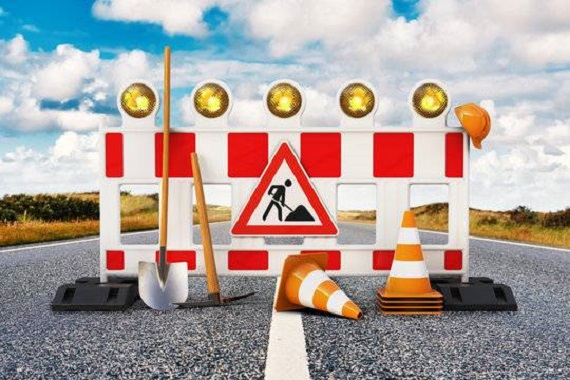

Everywhere you look, road signs communicate traffic rules, guide us to destinations, warn of potential hazards and provide information on nearby amenities such as parking lots or tourist attractions. Despite different shapes, colours, and symbols, all road signs display universally understood messages. It’s this familiarity that makes them remarkably similar in many parts of the world.
Even the two global regulatory systems – the Vienna Convention used in Europe and throughout much of Asia and Africa, and the Manual on Uniform Traffic Control Devices (MUTCD) in the US, Canada and Australia are understood by the general public. The latter, however, moves away from simple pictograms and instead relies more on text-oriented messaging and distinct shapes and colours. Both systems aim to inform, guide and warn traffic participants as well as ensure their safety.
Key Functions of Road Safety Signs
The main role of metal road signs is to communicate vital information to drivers, pedestrians and cyclists. Signs help organize traffic flow, warn of dangers and enforce legal requirements to prevent accidents. Most can be categorized into four main types:
- Regularity Signs: These convey traffic rules and laws. They describe mandatory requirements or indicate prohibitions that traffic participants must follow. Common examples are stop signs at intersections, speed limits for maximum legal speeds and prohibitory road signs, such as “No Entry” or “No Parking”.
- Warning Signs: These alert traffic participants of nearby or imminent hazards, including changes in road conditions. Examples include hazard warnings, such as “Slippery When Wet”, animal crossings, sharp turns or curves and steep road grades.
- Guide and Navigation Signs: These help traffic and pedestrians in finding specific destinations. Typical examples include directional road signs that indicate exits or display distances to towns and cities, and route markers that identify roads, such as interstate highways and street names.
- Motorist Service and Recreation Signs: Service signs indicate the location of hospitals, gas stations, camping sites, parking areas, and other related facilities. These are complemented by signs indicating nearby tourist attractions.
Other classifications include temporary traffic safety signs used in road construction, pedestrian and bicycle signs, railroad and light rail transit signs, and signs used to reroute traffic during accidents or emergencies.
The Meaning of Road Sign Colours and Shapes
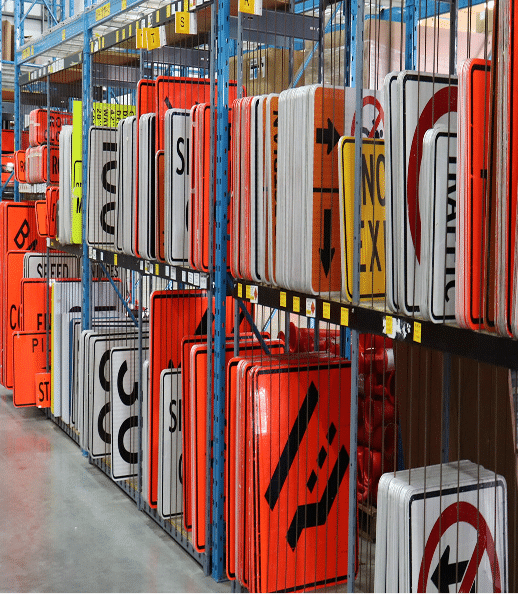
Drivers, pedestrians and cyclists have a general idea of what a road sign conveys well before reading the finer text. Colours and shapes help distinguish between warnings, alerts and general information, as well as the severity of the message.
What do Road Sign Colours Mean?
Red: Stop, yield or prohibition
Yellow: General hazard warning, or changes in direction or road conditions
Black/White: Regulatory signs, such as speed limits
Blue: Road service guidance, tourist information, evacuation routes
Orange: Temporary control, roadworks or construction
Green: Direction guidance, permitted movement
Brown: recreational and cultural interest area guidance
Fluorescent Pink: incident management
Fluorescent Yellow-Green: pedestrian, bicycle, playground, school bus, or school warnings
And Road Sign Shapes?
Octagon: used exclusively for STOP signs.
Inverted triangle: always means yield
Circle: immediate attention alerts or railroad crossings
Diamond: warning signs, indicating hazards and changing road conditions
Rectangle/Square: regulatory signs and notices (e.g. speed limits, parking zones, etc.) or guide, informational and destination road signs
Pentagon: school zone or school crossing
Pennant-shaped: no-passing zone.
Common examples are rectangular white and black “One Way” signs; diamond orange construction signs with black lettering (“ROAD WORK AHEAD”); square or rectangular white “DO NOT ENTER” signs. Green rectangular or square signs denoting nearby infrastructure or amenities (“AIRPORT”), etc. As mentioned, traffic participants get a general idea of the message a sign conveys by its colour and shape, with capitalized lettering removing any ambiguities.
Key Buying Considerations
Consider the metal used in construction, its thickness, reflectivity, compliance with relevant regulations, and any additional features or design elements that support durability and long-term legibility.
Aluminum is the industry standard for metal road signs, having proven itself as lightweight, resistant to rust and fairly durable. If weight and cost are considerations, a good alternative is an aluminum composite panel. For high-impact areas, consider the added strength of galvanized steel, and for decorative uses, often on private property, go with a higher strength of stainless steel.
Besides materials, thickness also determines durability and strength. Common gauges are thinner road safety signs in 0.040″ to 0.063″; standard 0.080″ signs and thicker 0.125″ variants, usually seen in high-traffic and industrial areas or settings with extreme weather conditions.
Reflectivity ensures higher visibility at night. Choose from engineer-grade (Type I/II) in areas like parking lots and private property for visibility up to 500 feet; high-intensity prismatic (HIP-Type IV) in common regulatory signs and diamond grade signs, seen in highways and high-risk areas, with visibility up to 1500 feet.
Lastly, ensure signs come with UV-stabilized coatings and protective laminate layers, and have rounded corners and pre-drilled holes that ensure easy installation. To be suitable for use on public and private roads, they must also comply with MUTCD regulations regarding size, shape, and colour.