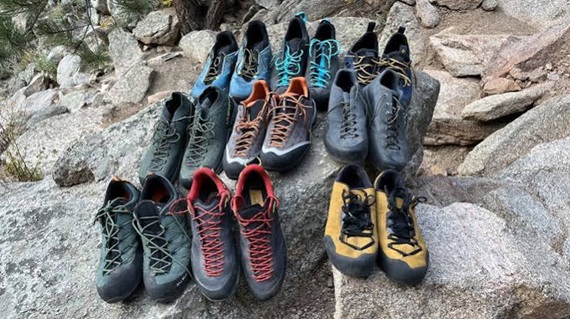

Every climb starts with a walk. Sometimes it’s a short stroll from the car. But more often, getting to the rock is half the adventure. Scree, boulder fields, and creek crossings are just some of the challenges waiting before you even rope up.
Climbing shoes can make this walk miserable. Boots can feel clunky when precise footwork is involved. Regular hiking shoes can fall short when the terrain gets technical. The solution? There are specialized approach shoes for men to tackle mixed terrain.
What Are Approach Shoes?
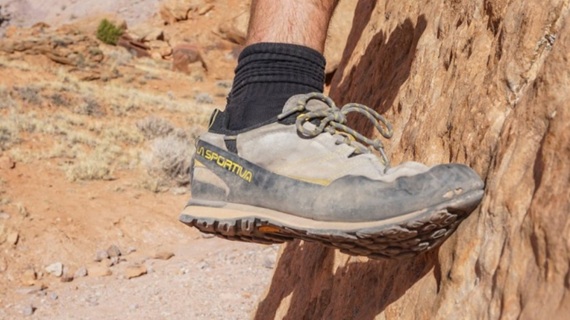
The approach shoe takes its name from the trek to the base of a route, which often ends in a scramble. It’s a hybrid that blends the comfort of trail footwear with the grip and precision of climbing shoes.
Climbers needed this type of footwear long before it existed, making do with heavy boots or flimsy canvas sneakers. In 1985, Five Ten founder Charles Cole finally put sticky climbing rubber on a tennis sneaker upper, and the Five Tennie became the first shoe of this kind.
Four decades on, many brands have put their own spin on the idea, and the category now covers a wide range. At one end sit climbing-focused models with a snug fit, a full rubber rand around the toe, lacing that runs almost to the tip, and a flat climbing zone for edging on small holds. At the other end, there are hiking-oriented designs built for long walks in, often prioritizing comfort and low weight.
What Is the Difference Between a Hiking Shoe and an Approach Shoe?
The former is designed for the trail, and the latter is designed for the rock at the end of it. The biggest difference sits underfoot. Hiking footwear typically features harder rubber that lasts on dirt and gravel, with deep, widely spaced lugs that bite into mud. The counterpart swaps that for a softer, stickier compound and shallower lugs. The fit differs too, with technical styles being snugger, closer, and lower to the ground.
That said, many climbers don’t reach for a technical shoe before the climb, especially when the walk in is long and the scrambling light. In such cases, the hiking-focused styles mentioned earlier are better suited for the distance, with just enough grip for the rocky sections along the way.
Can You Wear Approach Shoes Every Day?
Yes, in fact, many guides wear theirs on the trail, at the crag, and around town afterwards. Unlike men’s hiking boots, they’re light and low-cut enough that you barely notice them off the trail. This applies most of all to approach-ready models that look and feel more like runners than technical gear.
Approach Shoes Men Need in Their Gear
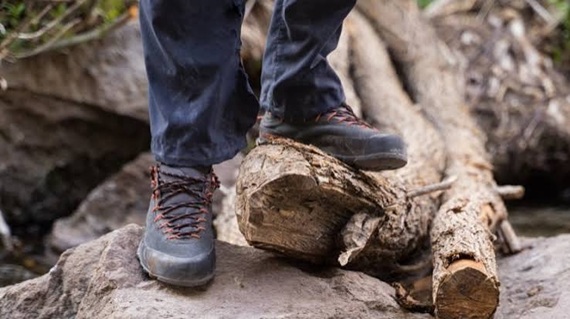
If you regularly end up scrambling up steep, rocky terrain, a dedicated, climbing-focused pair is worth the investment. If the walk in is long and the rock comes in short stretches, a trail-friendly pair will serve you better. Here are standout options from both ends of the range, from brands like Arc’teryx, Scarpa, Oboz and La Sportiva.
Arc’teryx Norvan LD 4 GTX
These approach shoes for men lean toward the hiking side of the range. Still, they share the same Vibram Megagrip rubber of the TX4 Evo by La Sportiva, so you won’t give up much grip on rock. You’ll find plenty of room for your toes, a snug hold through the arch, and a waterproof lining for wet, rooty trails. Even if you prefer to jog the flat sections, these will keep up with you.
Scarpa Crux
These are the shoes you reach for when precision matters. They have a close-fitting suede upper, and you can lace them right down to the toe. You’ll find the same Vibram Megagrip rubber underneath, along with a smooth climbing patch at the front for edging. Additionally, they’re resoleable, so you can get several seasons out of one pair.
Scarpa Ribelle Cross 2 GTX
Scarpa built the Ribelle Cross 2 GTX for hikers who cover ground quickly. These feel nimble underfoot, almost like trail runners, yet hold you steady on uneven ground. They have a close, low-slung fit that lets you put each step exactly where you want it. And if the weather turns, their GORE-TEX ePE membrane ensures your feet stay dry.
Oboz Katabatic LT Low GTX
Like the Ribelle Cross, these sit low and fit close, which helps when you’re hopping between boulders. If you like to wander off the marked path, you’ll appreciate the Trail Tread rubber, which holds on steep ground. The ACTEnergy cushioning takes some of the sting out of long descents. These also have a GORE-TEX lining, so you can cross creeks without soaking your socks.
La Sportiva TX4 Evo
You’ll find the TX4 Evo on the feet of many climbers, and for good reason. These have a suede upper and rubber rand that take a lot of scraping before they show wear. Under the toe, there’s a flat patch of Vibram Megagrip rubber for small edges, and you can lace them almost to the tip for a tighter fit. Once the tread wears down, you can also have these resoled.
Closing Thoughts
The right pair is the difference between reaching the base ready to climb and reaching it already worn out. So take your time to compare models and ask for expert advice if needed to ensure your next approach is the easy part of the day.