
Whether you are updating the kitchen backsplash, remodelling the bathroom or adding a new layer over an existing floor, tiles are the ideal solution for everything. They aren’t only durable and aesthetically appealing. They’re also water-resistant and offer effortless cleaning. And when it comes to tiles, choosing between porcelain and ceramic tiles is one of the main choices you’ll need to make.
What Is a Porcelain Tile?
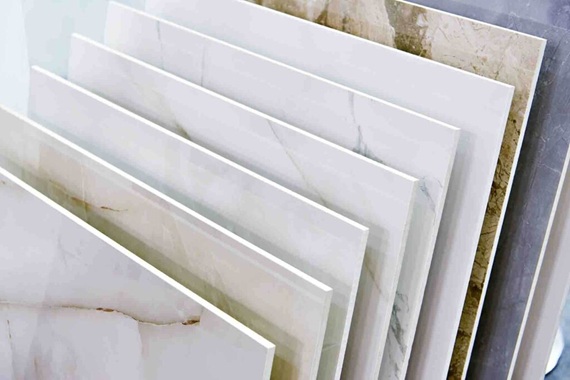
Well, porcelain tiles in Canada are the most popular choice among residents because of their visual appeal, extensive choice and durability. They’re super smooth and dense, with a lower water absorption rate, making them a good option even for outdoor use in places with a milder climate. Porcelain tiles are made with a fine clay mixture and fired at higher temperatures, making them harder and more durable, perfect for being used in high-traffic areas. Thanks to the wide range of porcelain tiles design are the first choice for kitchens and bathrooms.
What Is a Ceramic Tile?
Ceramic tiles are another popular choice among residents, but mainly because of their affordability. They’re made from natural clay, sand and water, after which they are glazed and fired at lower temperatures, which explains their greater porosity. Unlike porcelain tiles, which can be installed on floors and walls, ceramic tiles are more appropriate for walls and low-traffic areas. Unlike porcelain, they aren’t the best solution for kitchens and bathrooms since these are moisture-prone areas.
Comparing Their Features
Appearance
The truth is, it’s quite difficult to tell which tile is which except by the packaging or asking someone. While they look similar, checking specific things can help you determine the type of tile you have set your eyes on. Given the fact that porcelain models are among the most popular, they can even resemble vinyl flooring, which is just another reason for their popularity.
The easiest way to tell whether the tile’s packaging is full of porcelain or not is to look for the PTCA Certification Mark. There should also be a green and grey logo that reads “Certified Porcelain Tile 0.5% Water Absorption,” and a diamond-shaped tile forming the “O” porcelain.
Another important thing about these tiles is that they have a smooth back and are slightly heavier than ceramic.
Unlike the former packaging, the one for ceramic tiles doesn’t have certification badges. The back of these tiles is slightly coarser, and on porcelain it is smoother. Additionally, they are lighter than porcelain.
Durability
When compared to ceramic tiles, porcelain tiles are stronger and more durable mainly because of their material and higher firing temperatures. They are less prone to chips, but even if it comes to this, they’re less visible.
Being made from denser clay makes them less porous, making them harder and more resistant to moisture.
Being made from less dense clay means that these tiles are more prone to cracking and breaking. This is the main reason why they should be sealed with specific sealers for the entire unglazed ceramic tile.
Water Resistance
Even though porcelain tiles aren’t completely waterproof, they are considered to be water-resistant. Porcelain tiles can absorb no more than an additional 0.5% of their weight, but since they are glazed, they’re basically waterproof.
Ceramic tiles, on the other hand, aren’t as dense as porcelain, and they can absorb more than 0.5% water.
Heat Resistance
When it comes to their heat resistance, it seems that both can resist heat well. However, the porcelain ones are denser. This means that they’re less prone to cracking under excessive heat. Consequently, ceramic tiles are less dense, and they are more likely to crack and become damaged when exposed to extreme heat.
Installation
When it comes to their installation, it seems both of them are installed using the same method. Before their installation, a layer of cement board should be applied to the surface with a mortar-based thin-set adhesive, after which the tiles should be installed immediately. Once they are set, the joints between the tiles should be filled with mortar-based grout. Sealing it against moisture is recommended to increase water resistance, but this must be done once the grout sealer is completely dry.
A wet saw and other speciality tools are needed for cutting and installing the porcelain ones. These tools, especially the wet saw, must be used because of the tiles’ brittle nature. Cutting ceramic tiles, on the other hand, is much easier.
Cleaning and Maintenance
Cleaning porcelain and ceramic tiles is one of the easiest, as they can be mopped. They allow the use of any mop type, and they even allow for damp-mopping with a mild water-soap solution. Sweeping and vacuuming can also be done, ideally once or twice weekly to remove grit to avoid dulling their glaze. When damp-mopping the tiles, especially in the bathroom, it’s of vital importance to pay close attention to them and dry them after every exposure to avoid the development of mould and mildew in the grout seams.