
Shoeing a horse is a craft that blends various aspects, including metalworking, anatomy knowledge, and precision, but none of it can be properly used and applied without the right gear. A dull rasp, a mismatched nail, an anvil that’s seen better days – the instance of any one of these can easily turn a routine appointment into a frustrating one for both the farrier and the horse. If you’re new to the trade or are sourcing supplies for a new client, this guide breaks down the core categories of farrier products, what each tool does, and why it matters.
What Are the Essential Farrier Tools?
Hand Tools
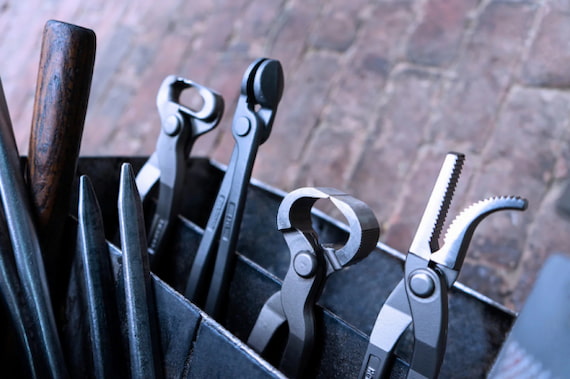
At the core of every farrier supplies kit are the hand tools used on nearly every appointment, regardless of what type of shoe is going on the horse. A well-stocked farrier equipment kit typically includes:
- Hoof nippers – for trimming excess hoof wall with a controlled, even cut;
- Pulloffs – for removing old shoes cleanly without tearing up the hoof wall;
- Hoof knives – to pare away dead sole tissue and shape the frog
- Nail nippers – to cut nail ends to length after driving;
- Clinchers – for folding nail ends flat against the hoof wall so nothing snags or injures the horse;
- Tongs, pritchels, punches, drifts, and creasers – used for detailed shoe shaping and modification.
Together, these tools let a skilled farrier handle everything from a basic trim to reshaping a shoe entirely by hand.
Rasps and Abrasives
The rasp smooths and levels the hoof wall after trimming, and it’s one of the most personal tools in the kit. Farriers tend to have strong opinions about blade type, handle style, and holder design, often shaped by years of trial and error. Beyond rasps, there are the essential abrasive products that come into play for farriers doing heavier shoe modification or grinding work at the forge. This includes examples like ceramic and cubitron grinding belts for shaping metal, finishing products for a smooth final surface, and hoof buffer attachments for cleanup work on the hoof itself.
Hammers, Anvils, and Forging Equipment
For farriers who forge or hand-modify shoes rather than working strictly out of the box, these tools are essential:
- Rounding hammers – used for shaping metal;
- Driving hammers – used for setting nails;
- Anvils and stands – used to provide a stable surface for shaping and fitting shoes;
- Forges – used to heat metal so it can be shaped to an individual hoof;
- Flux and beeswax – used in various forging and finishing steps.
Hammer weight and balance are often a matter of personal preference, and many farriers spend years dialing in exactly what feels right.
Horseshoes and Nails
This is where the sheer range of farrier equipment on the modern market becomes obvious. Shoes come in steel or aluminum, bar or open-heel, glue-on or nail-on, and in specialty styles for gaited, racing, or standardbred horses. Nails matter just as much: head style, blade profile, and finish (including copper and hybrid options) all affect how well a nail seats and holds in a given hoof.
Hoof Care and Support Products
Shoeing doesn’t stop at the shoe and nail. Supporting products round out the kit for horses with additional hoof needs:
- Sealants and repair compounds that come in handy with cracked or damaged hooves;
- Packing materials for cushioning and support;
- Pads (wedge, flat, rim, or leather) often paired with therapeutic shoeing;
- Hoofstands, which hold the hoof steady at a comfortable working height and save wear and tear on a farrier’s back over a long day.
Choosing the Right Supplier
Equipment quality matters, but it’s certainly not all – there’s also the crucial aspect of being sure on the reliability of the source. Something as simple as missed shipment or wrong order can derail an entire day’s schedule in a trade built around back-to-back appointments. Working with a trustworthy and experienced farrier supply shop that have built their business around serving farriers specifically pays off in the long run.
It’s businesses like these that offer everything you need, from horseshoes, nails and tools, to chaps and forging supplies all in one place. This cuts down on the number of vendors a farrier has to manage, and the difference in quality. Having in-house farriers available to answer product questions is also worth looking for, since it means the people taking your order actually understand the trade firsthand. They can provide the service you need from start to finish, helping you with essential pieces of advice on the equipment, tools, use and providing assistance beyond the purchase.
Putting It All Together
There’s no universal “correct” kit; preferences around rasps, hammer weight, nipper size, and even apron style are personal and evolve over a career. What matters most is starting with durable, well-made equipment and having a dependable source to restock it as techniques and materials continue to improve.