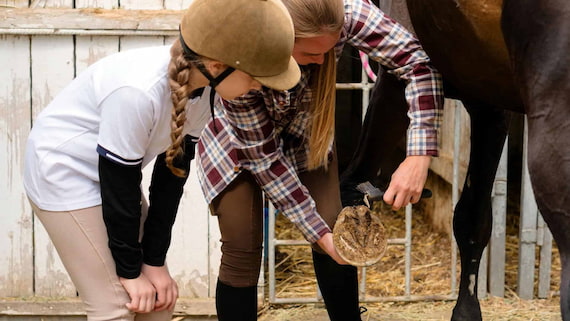

Of all the parts of a horse’s body, the hooves rank among the most critical. They support the animal’s weight, absorb shock, and provide stability across varied terrain. Poorly maintained hooves can quickly develop issues ranging from cracks to infections, which compromise gait and overall soundness.
For farriers, maintaining hoof health is both an art and a science, and it begins with having sturdy and reliable hand tools. Mastery of these tools supports precision, efficiency, and the long-term comfort of the horse.
Tongs
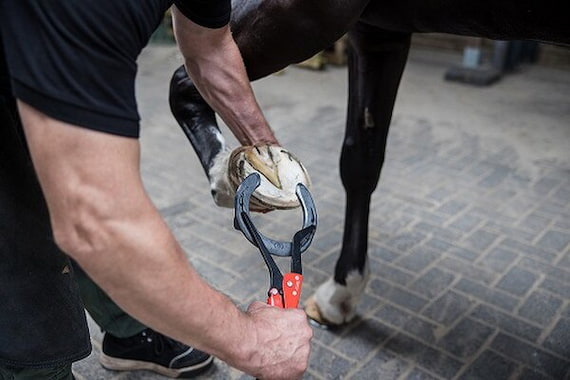
Tongs are an indispensable hand tool in farrier work, as they allow the handler to hold and control a horseshoe while fitting or removing it. They provide a secure grip, which is quite important when dealing with hot or newly shaped metal shoes. Understanding how tongs work helps you appreciate the precision that goes into proper shoeing.
Tongs are available in many shapes, depending on the farrier’s preference and the type of shoe. Their design helps keep hands safely away from the metal while allowing enough control to position the shoe correctly. Good tongs are strong, well-balanced, and comfortable to use, which is important when working with horses that may shift their weight or move unexpectedly. When you use tongs, you can see how carefully each shoe is adjusted to match the horse’s hoof shape. That level of attention highlights why proper shoeing plays such a key role in hoof health and overall comfort.
Creases
Creases are small tools used to create a groove along the shoe where the nails sit. This helps them stay flush with the shoe, increasing traction and giving the shoe a more polished, clean look. The groove needs careful shaping so the nails fit properly and hold the shoe securely, rather than sticking out or catching on anything.
Creasing is a bit of an art because the groove has to be even from end to end. A good crease keeps the nails in alignment, adding stability to the shoe. If the creasing is uneven, that shoe may twist or lose balance. Watch a farrier use a creaser, and you’ll appreciate how such a groove supports the natural gait of the horse. Professional farriers understand that creasing is more than a cosmetic detail; it is a structural necessity that reflects craftsmanship and attention to detail.
Brushes
Although simple in design, brushes play an important role in hoof care. Hooves need thorough cleaning before trimming and shoeing. Dirt, mud, and small stones can settle into the grooves, causing discomfort or leading to infection. A sturdy hoof brush removes this debris and lets the farrier clearly assess the condition of the hoof.
Regular brushing is essential. It allows you to catch early signs of problems, such as thrush, cracks, or heat. Keeping the hooves clean also avoids the buildup of bacteria. Most brushes have stiff bristles designed to get into the deeper parts of the hoof without damaging the surface. Using a brush, especially in the wet or muddy seasons, supports long-term hoof health and keeps the horse more comfortable.
Hoof Nippers
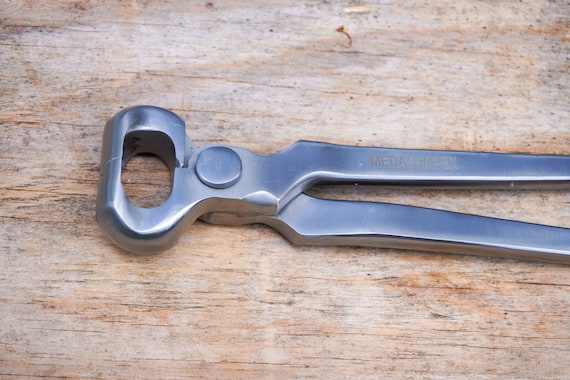
Hoof nippers are used for trimming the hoof wall and function much like large, strong clippers. Farriers use them to cut away excess growth and shape the hoof before rasping it smooth. Proper trimming keeps the balance, avoids stressing the tendons and joints, and keeps the horse moving in comfort.
Hoof nippers must be kept sharp and handled with caution. A clean, smooth cut helps retain the hoof in its natural shape and reduces the risk of splitting. Regular trimming keeps the hooves strong and even, with less chance of cracking or chipping. Because of this, trimming plays an essential role in hoof health, and farriers need to keep horses on a consistent trimming schedule.
Nail Nippers
Although similar in appearance, nail nippers are a different tool from hoof nippers. They are used to clip and neaten the nails after they have been driven into the shoe. Once the nails are bent and clinched, excess needs to be trimmed to prevent sharp edges that could scratch the horse or catch on objects. Nail nippers create a smooth, safe finish. If the nails are cut correctly, the shoe stays on, and the hoof is comfortable.
Farriery involves a combination of expertise, experience, and equipment. Hand tools such as tongs, creasers, brushes, hoof nippers, nail nippers, and pull-offs serve a specific purpose in maintaining sound hooves and effective shoeing. Familiarity with this equipment ensures that a farrier does their job well.
Although the work requires physically strong individuals with knowledge of the trade, it is the skilled application of these manual tools that separates the work of a qualified professional from that of an untrained amateur. For the farrier, it is not simply tools; it is an extension of the hand, deciding the future soundness of the horses.