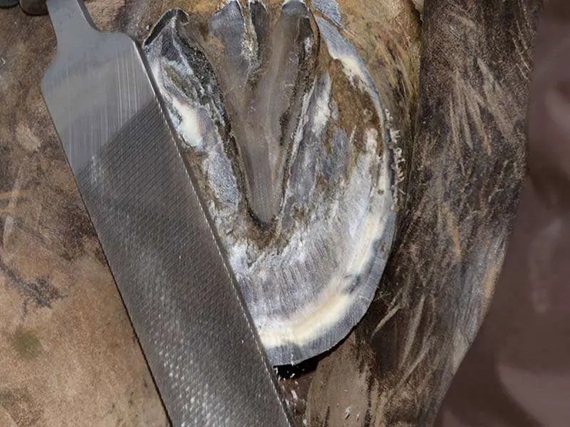

Every time a farrier picks up a horse’s foot, there is one tool that sees more use than almost anything else in the apron pocket: the rasp. Every rasp stroke shapes, defines, and levels the hoof wall for a perfect trim. While it might seem like a simple tool, choosing and using the proper rasp can actually make quite a difference in the outcome.
What Is a Farrier Rasp?
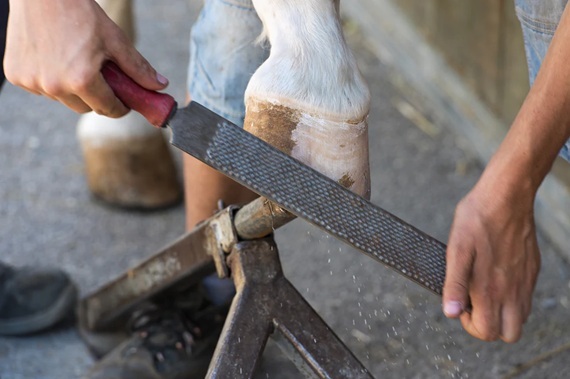
A farrier rasp file is a flat file with large teeth used to shape, smooth, and level a horse’s hoof wall during trimming and shoeing. The industry standard measures about 14 inches in length. This may vary depending on the manufacturer. It has two sides – one with aggressive teeth that remove a lot of material quickly, and one with smaller teeth for finishing the hoof surface.
A horse rasp is not just a standard metal file, but one designed for the hardness and density of the hoof tissue. The teeth are angled and positioned to cut through keratin easily without clogging or skipping. A quality rasp for horses stays sharp and comfortable throughout its service life.
Types of Farrier Rasps
Farrier rasps come in different shapes, sizes, and designs, each tailored to specific jobs and preferences.
- The standard rasp is the most versatile. It has the classic two-sided structure, a rasp side and a file side. It is ideal for general hoof care tasks such as trimming and levelling the foot. Most farriers carry one standard rasp as their main equipment.
- Half-round rasps feature a flat face on one side and a convex, curved face on the other. The curved side comes in handy when rasping the inner wall of the foot, trimming the bars, or rasping hard-to-reach places. They are a popular secondary rasp for detailed work.
- Milled tooth rasps are made using a mechanical process called milling, used to create the tooth pattern. They provide a more consistent, even cut to hand-cut rasp types, making them highly efficient for high-volume yards.
- The hand-cut rasps are produced using traditional methods that involve manual striking of individual teeth. Many farriers claim that these rasps offer a more delicate feel and better cutting action. This type of rasp is relatively costly compared to others and preferred by farriers who value quality over speed.
- Combination or multi-cut rasps have different kinds of tooth patterns across different zones of the tool. This allows the farrier to switch between aggressive cutting and delicate finishing without switching tools.
What to Consider When Selecting a Rasp
The selection of an appropriate rasp for horses is more than picking up a familiar brand off the shelf. Certain factors have to be considered.
Cut and Aggressiveness
How fast do you want to remove the material? A coarser cut is effective when working with large, overgrown hooves, but it may be challenging when working on sensitive areas. A finer cut will take time to produce accurate results. Most farriers actually have two rasps – one for roughing out and one for fine finishing.
Handle Design
The handle plays an important role when selecting a rasp since it affects fatigue and control. Cushioned handles reduce strain during prolonged use, while wooden handles cater to those who like the traditional way of working. Many rasps are sold without handles, so you can choose your preferred grip.
Steel Quality and Longevity
The quality of the steel will determine how long the teeth hold their edge. Top-quality rasps are forged from high-carbon steel and remain sharper for longer than cheaper models, which wear down quickly, especially when used on dry, hard hooves.
Size
Regular-size rasps, usually 14 inches long, are suitable for most uses, but those with smaller hands will probably find 12-inch rasps more comfortable to use.
Matching the Rasp to the Hoof
Maybe one of the most underestimated aspects of horse rasp selection is learning how to choose the right rasp for the hoof in front of you. Dry and brittle hooves require a fine-tooth rasp and a controlled approach. Using one with rough teeth might cause cracks or chips, destroying all the preparatory work. Wet, soft hooves, often in moist climates, tend to clog the teeth, so choosing a self-cleaning rasp could be a wise choice.
Thin, fragile hooves found in young horses require a finishing rasp used with a light touch. For heavy draft horses with thick, dense hooves, you need a coarser, more durable instrument. For older horses with chronic conditions, you need a precise tool that gives you more control.
A skilled farrier with years of experience in handling different tools on different horses develops an intuitive sense for which rasp to reach for.
Final Word
The farrier rasp plays a critical role in the care and well-being of a horse’s hoof. Which one is the best for the job depends on your trimming style and the types of hooves you typically work on. Check the rasp’s aggressiveness, handle grip, steel quality, and the size of the rasp and learn how to select the correct one for each hoof. From a foal to an elderly draft horse, the proper rasp is essential.